-1-1-2-126x39.png)

CNC Machining Case Studies
A case study is valuable not just because it shows what was made, but because it explains why a route was chosen, what problems were encountered and how risk was turned into an executable solution.
This type of information gives purchasing teams and engineering teams a much stronger basis for judgment than simple photo display.
If you are looking for a supplier that can quickly evaluate CNC part manufacturability, quotation boundaries and delivery risk, it is recommended to upload 2D drawings, 3D models, sample photos or BOM information to start an initial review.
Even if your current project information is not yet fully complete, we can still help judge the project direction first as long as you provide the part function, estimated quantity, key dimensions, tolerance priorities and target lead time. We can also help you organize the key information needed for the next formal quotation stage.

Project discussion, part review and engineering collaboration help turn a complex machining request into an executable project route.
View Projects by Industry
It is recommended to group case studies by automation equipment, industrial structural parts, assembly support parts, cosmetic parts and functional modules.
This helps customers find reference projects closer to their own application scenarios much faster.
For industrial buyers, the value of an industry category is not just labeling the part source. It also helps them quickly judge whether you understand the real context behind that part, such as assembly logic, structural responsibility, cosmetic expectations and delivery rhythm.
When a customer can move from an industry label to a relevant project path within seconds, the page does a better job of supporting RFQ decisions instead of acting as a simple picture archive.
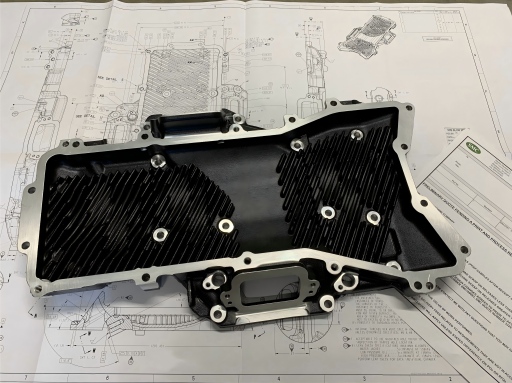
Industry-based classification helps customers locate reference cases that match their own project environment more quickly.
View Projects by Material
The material dimension helps customers judge whether you understand the typical risks of that material in machining, subcontracting, appearance control or assembly.
This gives customers more meaningful judgment than looking at part photos alone.
Different materials carry different machining logic, tolerance sensitivity, surface finishing risks and sourcing concerns. A case page that reflects these differences shows that your team understands not only how a part looks, but also what can go wrong in real production.
This is especially useful for customers comparing suppliers for aluminum parts, stainless steel parts, carbon steel structures or engineering plastic components with assembly and appearance requirements.
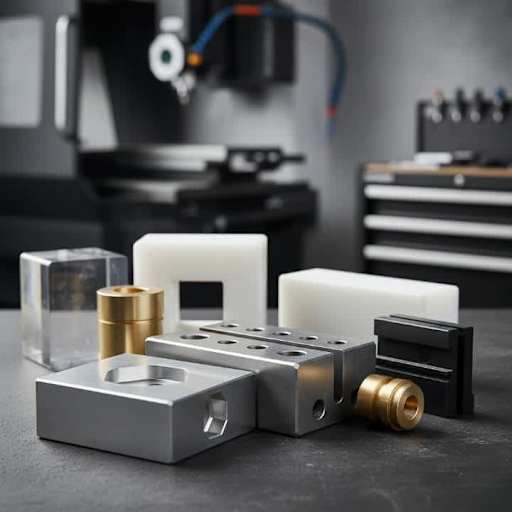
Material-based case organization helps customers judge whether risk awareness extends beyond simple geometry review.
View Projects by Process Challenge
It is recommended to add a challenge-based classification, such as multi-face complex parts, appearance-control parts, batch-consistency parts, revision-change parts and import-replacement parts.
Many high-value customers care less about the industry label itself and more about whether you have handled similar problems before.
This challenge-based view is especially useful when the customer's part is difficult to categorize by industry but clearly difficult in execution. It lets them quickly assess whether your team has experience with geometry complexity, cosmetic expectations, version updates, replacement sourcing or repeat-order consistency.
For many procurement teams, this is one of the strongest trust-building dimensions on a case page because it directly connects to delivery risk and supplier judgment quality.

Challenge-based classification highlights execution experience, not just product type or industry label.
What Every Case Should Explain Clearly
Each case study should consistently explain five parts: project background, technical risk, process judgment, quality focus and delivery result.
A fixed structure helps customers understand the project more easily and also makes it easier to replicate later across multilingual sites.
For B2B industrial websites, a strong case page is not built by collecting random success stories. It is built by using a repeatable format that helps visitors compare cases quickly, understand how decisions were made and judge whether your process thinking fits their own project stage.
A consistent template also improves internal content production efficiency because the team always knows what information to gather before publishing a new project case.

A structured case template helps customers compare project logic, process routes and delivery outcomes more efficiently.
Start a Similar Project Evaluation
If your current project information is not fully complete, you can still begin with part function, estimated quantity, key dimensions, tolerance priorities and target lead time.
You can upload 2D drawings, 3D models, sample photos or BOM information to begin an early manufacturability and quotation review.
This early-stage input often helps define quotation boundaries and delivery risk before the project package becomes fully formalized, which is especially useful for teams still aligning engineering details and sourcing strategy.
FAQ
Do case studies always need to show the customer name?
Is it still worth showing a case if it is not exactly the same as the customer's part?
What should a case study page emphasize most?