-1-1-2-126x39.png)

Surface Finishing and Cosmetic Standards
Surface finish requirements should not be left to default interpretation.
In many machining projects, the real issue is not dimensional accuracy. It is the gap between the customer’s assumed cosmetic standard and the supplier’s routine interpretation.
Clarifying appearance expectations in advance is one of the most effective ways to reduce rework, delivery disputes and avoidable quality discussions.
Use drawings, reference images and visible-face notes to define cosmetic expectations more clearly before machining and shipment.
Why “Finish as Usual” Is Not Specific Enough
“Finish as usual” does not mean the same thing across different factories, projects or product types.
This becomes especially risky in cosmetic parts, visible faces, post-assembly exposed surfaces and branded components where appearance matters to the final user.
For these projects, cosmetic requirements should be stated explicitly instead of being left to default assumptions or routine shop standards.
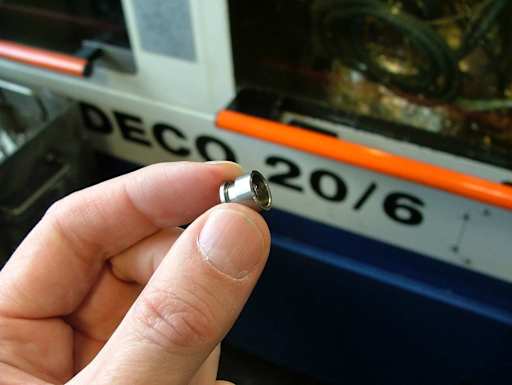
For cosmetic parts, the difference between “routine finish” and customer expectation is often where disputes begin.
How Cosmetic Parts and Functional Parts Differ in Surface Expectations
Functional parts and cosmetic parts should not be judged by the same default surface standard.
Functional parts usually place more emphasis on fit, safe edges and durability.
Cosmetic parts place more emphasis on color consistency, texture uniformity, visible tool marks, edge details and how the part looks after transport protection is removed.
Using one default standard for both types is a common source of disagreement in machining projects.

Cosmetic standards focus on what can be seen, while functional standards focus on fit, safety and durability.
How to Specify Color, Texture, Edges and Tool Marks
The more specifically you describe cosmetic surfaces at RFQ stage, the closer the evaluation will be to your real expectation.
It is helpful to mark which faces are cosmetic, which faces will be hidden after assembly, whether light tool marks are acceptable, whether there is a color or texture reference, and whether any local masking or untreated areas are required.
These notes make quotation review, feasibility assessment and appearance control much more reliable.
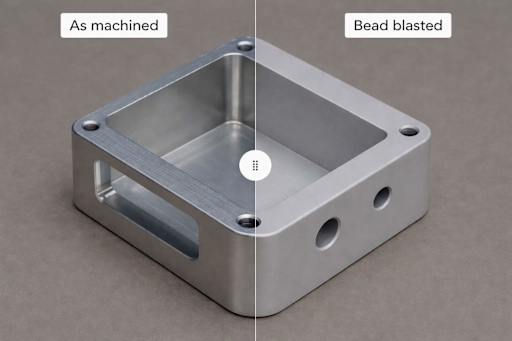
Color references, texture notes and visible-face marking reduce cosmetic ambiguity before production begins.
How Surface Finishing Can Affect Dimensions and Assembly
Some surface treatments influence more than appearance. They can also affect edge feel, local fit and final surface condition.
For tight-tolerance zones, assembly faces, threaded areas or sliding contact surfaces, it is better to define treatment boundaries in advance rather than leave them open to interpretation.
This helps prevent avoidable problems in local fit, edge condition and downstream assembly behavior.
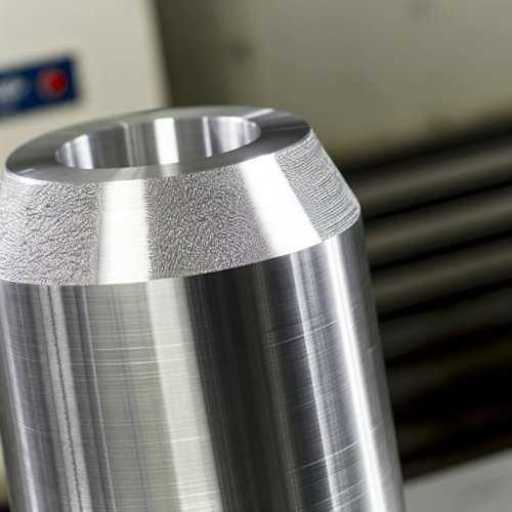
Treatment boundaries matter most where tolerances, threads or sliding contacts are sensitive to final surface condition.
Surface Finishing and Cosmetic Standards FAQ
What extra notes should be added for cosmetic parts?
What if appearance requirements are difficult to describe in words?
Will surface treatment always affect dimensions?
Clarify Cosmetic Expectations Before Production Starts
If your project includes visible faces, branded appearance parts or assembly-exposed surfaces, it is better to define finishing and cosmetic expectations before quotation and machining.
You can upload drawings, add visible-face notes, describe edge expectations and provide color or texture references so the review is closer to your true acceptance standard.
This helps reduce RFQ ambiguity, cosmetic disputes and rework risk in later production stages.
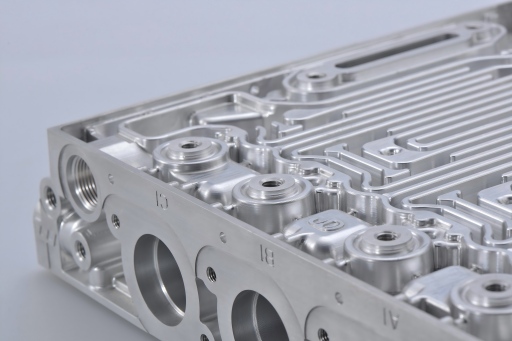
A clearer RFQ usually starts with clearer cosmetic notes, visible-face marking and finishing references.